
🌊 Guiding Ships Safely: Inside the World of Lighthouses and Maritime Buoys
- Davide Ramponi

- 2. Jan.
- 5 Min. Lesezeit
My name is Davide Ramponi, I’m 21 years old and currently training as a shipping agent in Hamburg. On my blog, I take you with me on my journey into the exciting world of shipping. I share my knowledge, my experiences, and my progress on the way to becoming an expert in the field of Sale and Purchase – the trade with ships.

For as long as ships have sailed, mariners have depended on lights, shapes, and signals to find their way. From towering stone lighthouses standing stoically on rugged coasts, to modern AIS-equipped buoys bobbing quietly in the swell — navigational aids are the unsung heroes of maritime safety.
But who maintains these beacons? How do they fit into today’s high-tech digital routing systems? And what happens when they fail?
🔍 In this post, I’ll walk you through:
🏛️ Who maintains and inspects maritime navigation aids
📡 How GPS and AIS have modernized route planning
⚓ The essential role of buoys and lighthouses in safety
📉 Real-world case studies where navigation failed
📜 Historical insights that show how far we’ve come
Let’s shine a light on the invisible network guiding vessels through oceans and harbors alike.
🛠️ Who Maintains the Navigation Network?
Maritime navigation doesn’t just happen — it’s maintained through national agencies, port authorities, and lighthouse services around the world.
🧰 Key responsibilities include:
Regular inspection and repair of buoys, beacons, and foghorns
Electrical servicing for automated lighthouses
Seasonal placement and removal of floating aids (in ice-prone regions)
Battery and solar maintenance
Updating electronic navigation databases
🇩🇪 In Germany, Wasserstraßen- und Schifffahrtsverwaltung des Bundes (WSV) maintains over 20,000 navigational aids.
🇺🇸 In the U.S., the Coast Guard’s Aids to Navigation (ATON) division is responsible for inspecting and servicing more than 50,000 buoys and markers.
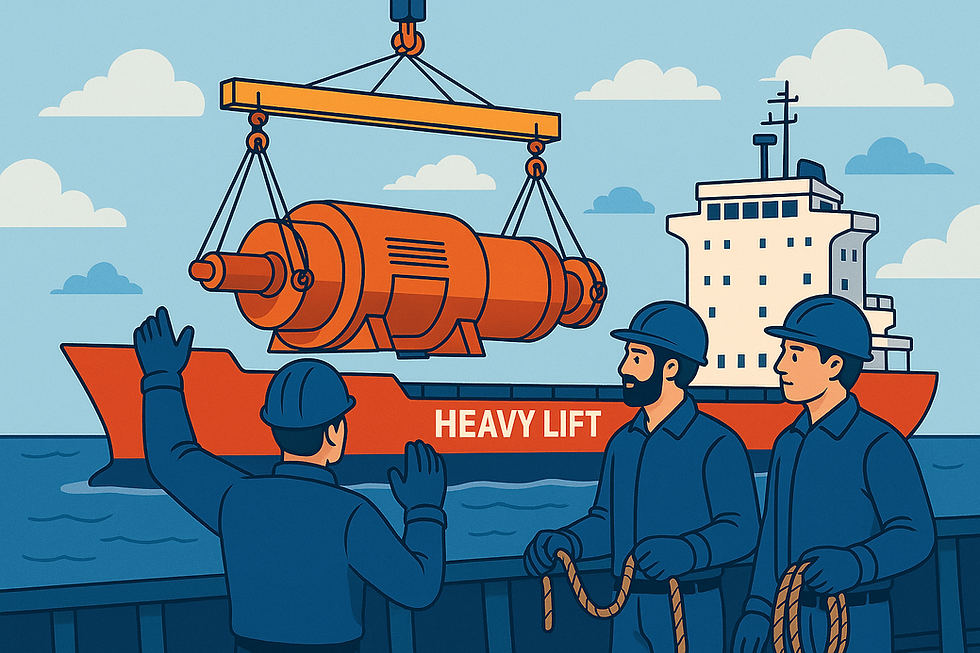
🛥️ They use buoy tenders — specialized vessels equipped with cranes and positioning gear — to lift, clean, repair, and reposition buoys several times a year.
💬 One technician said: “Most people don’t think about them until something goes wrong — but we’re out there in all weather, keeping the lanes lit and marked.”
📡 GPS, AIS, and the Modern Age of Navigation
Despite the rise of digital systems like ECDIS and integrated bridge systems, physical navigation aids are far from obsolete.
⚙️ Today’s mariners rely on a hybrid system of:
Global Positioning System (GPS)
Automatic Identification Systems (AIS)
Radar overlays
Electronic charts with digital buoy positions
Traditional visual confirmation of buoys and beacons
💡 Many buoys today are “smart” — equipped with:
AIS transmitters that broadcast their exact location
Light sensors for adaptive flashing
Remote monitoring systems to alert if the buoy is adrift or damaged
Solar panels to stay energy-independent
🛰️ Yet, satellite-based systems can fail — due to jamming, spoofing, or solar flares. That’s why redundancy through physical aids is still crucial.
📌 In busy ports, physical markers give immediate spatial awareness — a green can buoy marking a starboard turn, or a red light flashing on a pierhead during fog.
⚓ Buoys and Beacons: The Physical Safety Net
Whether it’s a mega-container ship or a coastal fishing boat, buoys and lighthouses are the last line of defense against navigational errors.
🌊 Common types of aids:
Lateral buoys: Red and green, marking port/starboard channels
Cardinal marks: Indicating safe passage relative to compass points
Isolated danger marks: Black and red, placed near rocks or wrecks
Safe water marks: Red and white stripes, indicating open sea
Sector lights: Color-coded lighthouse beams for precise steering
Range markers: Two aligned lights for entering narrow channels
📍 Case in point:
In the Elbe River leading to Hamburg, dozens of navigation aids ensure large container ships can turn and approach with just meters to spare.
And lighthouses?
While they’re mostly automated today, they still serve as visual fixes, iconic landmarks, and emotional symbols of maritime history.
❌ When Navigation Aids Fail: Lessons in Tragedy
Maritime safety depends on every piece of the puzzle — and when one part fails, consequences can be fatal.
🚢 Case: Costa Concordia (2012)
Though not due to a buoy failure, this disaster highlighted the importance of strict adherence to navigational channels. Captain error and deviation from marked routes led the ship to strike rocks, resulting in 32 deaths.
⚠️ Case: MV Tricolor (2002)
A Norwegian car carrier collided with another ship in dense fog in the English Channel. Despite active AIS and radar, inadequate physical marking of the wreck led to two more vessels hitting it in the days that followed.
🧭 Lessons learned:
Redundant marking (physical + electronic) is critical
Rapid buoy deployment at wreck sites saves lives
Regular maintenance prevents misplacement or lighting failures
🕯️ A Look Back: From Fire Towers to Solar Sensors
Long before GPS and automation, lighthouses were the mariner’s only guide through the night.
🏛️ Notable historical milestones:
Pharos of Alexandria (c. 280 BC) – One of the Seven Wonders of the Ancient World
Hook Lighthouse, Ireland – In operation since the 12th century
Eddystone Lighthouse, UK – Set the blueprint for open-sea lighthouse design
US Lighthouse Service (1791) – Forerunner to today’s Coast Guard ATON
🕰️ Early lighthouses used:
Open fires or whale oil lamps
Reflective mirrors and glass lenses (e.g., Fresnel lenses)
Manual wick trimming and hand-cranked fog bells
Today, most are unmanned, but some — like Germany’s Leuchtturm Roter Sand — are preserved as living museums, showing visitors how keepers lived and worked.
🌍 A Network that Never Sleeps
Every day, tens of thousands of ships crisscross the globe — and every one of them depends on this silent, glowing, floating infrastructure.
🌐 Behind the scenes:
Satellite corrections update buoy positions in real time
Remote telemetry warns of outages or power loss
Maintenance schedules ensure zero downtime
Bridge officers train to interpret signals in any weather
It’s not just navigation — it’s risk mitigation, accident prevention, and environmental protection.
⚓ Think about it:
A single misplaced buoy in a narrow channel could lead to a grounding, a blocked port, or an oil spill. Navigation aids aren’t decorative — they are critical infrastructure.
📌 Conclusion: Still Guiding, Still Vital
In a world of autonomous shipping and AI route optimization, you might wonder if lighthouses and buoys still matter.
But the truth is — they’re more important than ever. Because no matter how advanced the tech gets, you still need a light when the power fails. A buoy when the radar glitches. A fixed point when the sea is anything but.
Key Takeaways 🎯
🛠️ Navigational aids are maintained by expert teams year-round
📡 GPS and AIS have modernized — but not replaced — physical markers
⚠️ When lights fail, accidents happen — redundancy is key
🕯️ History reminds us how far we’ve come — and how much we still depend on tradition
🌍 The global maritime network never sleeps — and neither do its protectors
👇 Have you ever worked with ATON services or sailed through a buoyed channel in poor visibility?
💬 Share your thoughts in the comments — I look forward to the exchange!


Kommentare